The geography problem in Polish last-mile delivery
Poland's settlement pattern creates persistent last-mile logistics challenges that have no straightforward road-based solution. The country has roughly 43,000 villages, many of them small enough (fewer than 500 residents) that daily postal delivery is economically marginal for parcel operators. In mountain areas — particularly the Bieszczady, Tatra foothills, and Sudety — winter road closures can isolate communities for days at a time.
The Odra and Vistula flood plains present a different problem: during peak floods, which have become more frequent and severe since 2020, road infrastructure is cut off in ways that disconnect otherwise well-served communities. Drone delivery to flood-isolated households made national news during the September 2024 Odra floods, when a Wrocław-based operator conducted emergency supply runs to three villages in Lower Silesia for eleven days.
Medical logistics: the most established use case
The most operationally mature UAV logistics application in Poland is not commercial parcel delivery but medical supply transport. Since 2022, a pilot programme coordinated by the Regional Medical Rescue Centre (WSPR) in Rzeszów has used fixed-wing drones to transport blood products, antidotes, and diagnostic samples between four hospital sites in Podkarpacie province.
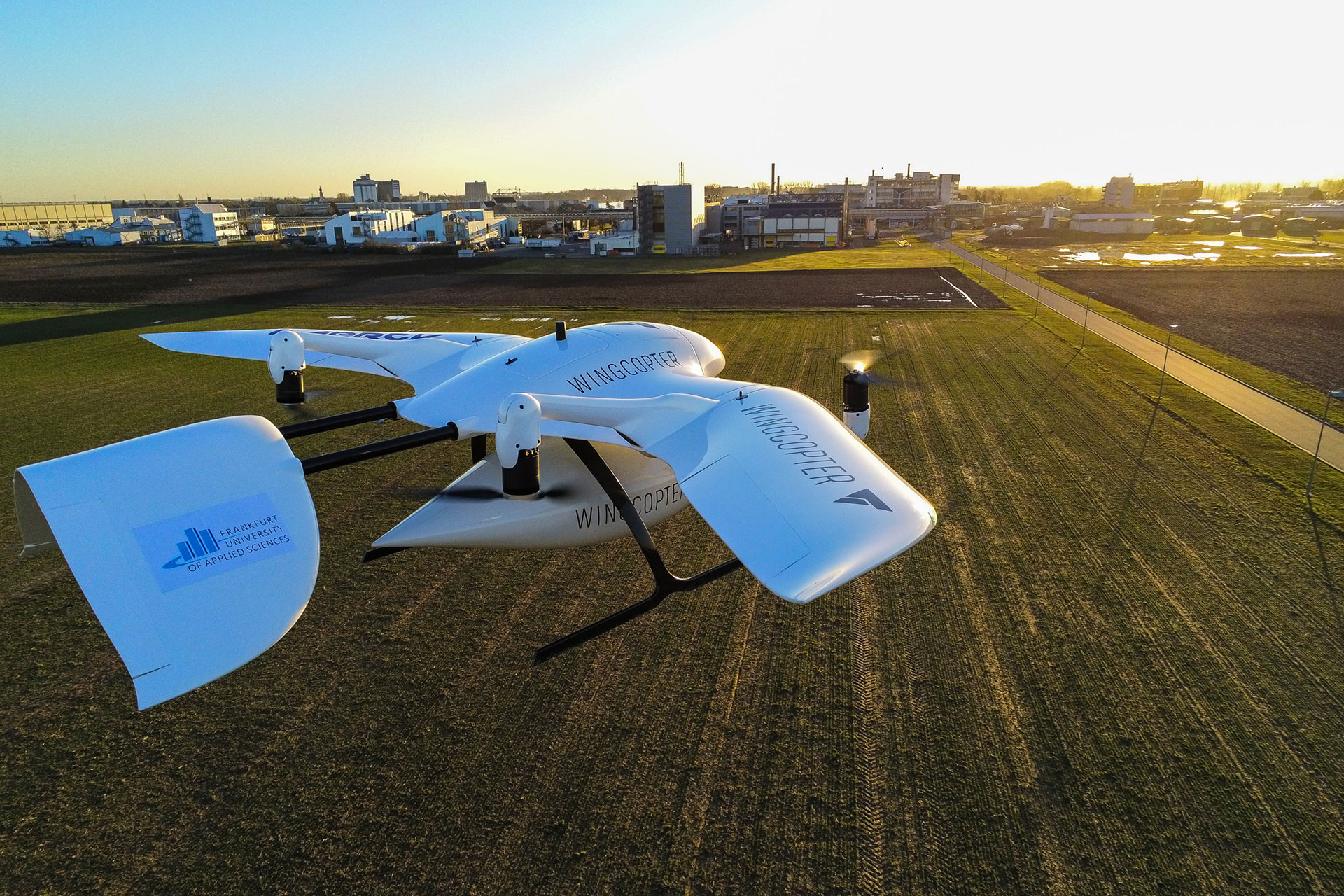
The programme uses Wingcopter 198 aircraft — German-manufactured fixed-wing VTOL drones with a 6-kilogram payload capacity and a 75-kilometre operating radius. Each aircraft operates under a dedicated BVLOS corridor authorisation from PAŻP and uses encrypted command links. The economic case is straightforward: the Podkarpacie programme covers terrain that requires 50–90 minutes by ambulance and can be flown in 18–25 minutes point to point.
As of early 2026, the Rzeszów programme has completed over 1,200 flights without a payload loss incident. The programme has been cited by the European Medical Association as a model for EU-wide adoption.
Blood transport logistics in detail
Blood products require temperature-controlled transport — typically 2–6°C for red cell concentrates. The Wingcopter aircraft used in the Rzeszów programme carry a certified insulated pod that maintains temperature for up to 90 minutes, which is sufficient for the routes flown. GPS tracking allows dispatchers at both endpoints to monitor ETA in real time, triggering warm-up procedures at the receiving hospital 8 minutes before landing.
This level of operational precision would be difficult to replicate with conventional transport on mountain roads, where unexpected traffic, weather, or road surface conditions can add 15–40 minutes to journey times.
Commercial parcel delivery: still experimental
In contrast to medical logistics, commercial UAV parcel delivery in Poland remains in a prolonged experimental phase. Two primary factors explain the slow progress: regulatory complexity and unit economics.
For a commercial delivery drone to operate BVLOS in Polish urban or peri-urban airspace, the operator needs not only a PAŻP BVLOS authorisation but also coordination with local authorities, notification to adjacent aviation facilities, and — in practice — a U-Space service provider (USSP) agreement for operations in designated U-Space zones. Warsaw and Kraków have established U-Space volumes; most other cities have not.
Unit economics present an equally stubborn problem. A delivery drone capable of carrying a 5-kilogram parcel over a 15-kilometre round trip costs 150,000–300,000 PLN to procure, requires a trained pilot on standby for each flight, and has a per-delivery cost of 40–120 PLN depending on how utilisation rates are calculated. This compares with a Polish courier delivery cost of 8–15 PLN for standard parcels.
Where the economics do work
The situations where UAV logistics costs become competitive are narrower but real:
- Emergency medical supplies where the alternative is ambulance deployment at 200–400 PLN per call-out.
- Island and peninsula communities where ferry-based delivery adds a day or more to lead times — the Hel Peninsula in Pomerania and several Vistula delta communities have been the subject of feasibility studies.
- Remote forestry and energy infrastructure — delivering spare parts or tools to forestry districts or wind turbine maintenance teams involves significant transport overhead that UAVs can reduce.
- Disaster response — as demonstrated in the 2024 Odra floods, where the drone delivery cost per household was under 80 PLN and no alternative existed.
Infrastructure inspection as a logistics adjacency
Polish energy infrastructure operators — primarily PSE (national grid) and the regional distribution companies — have integrated UAVs extensively into maintenance logistics over the past four years. The term "logistics" here extends beyond delivery to encompass the movement of inspection data: a UAV conducting a 40-kilometre power line survey returns thermal and visual imagery that, until recently, required a helicopter flight costing 8,000–15,000 PLN per hour.
The same BVLOS authorisation infrastructure that enables delivery operations also enables infrastructure inspection, and several Polish operators have built mixed-revenue models combining seasonal agricultural work with year-round energy infrastructure contracts.
Tauron Dystrybucja, one of the largest Polish distribution system operators, completed its first fully UAV-based overhead line survey of the Silesian distribution network in 2024 — covering 4,200 kilometres of medium-voltage lines using three fixed-wing drones over a six-week campaign. The survey identified 340 structural anomalies that required follow-up ground inspection, at a total operational cost reported as 60% below the previous helicopter-based approach.
Regulatory trajectory
PAŻP published a consultation document in November 2025 proposing a simplified BVLOS authorisation pathway for operators with demonstrated safety records — a "trusted operator" category that would reduce per-operation notification requirements for routine corridor flights. If adopted, this would materially reduce the administrative overhead for both medical logistics and infrastructure inspection operators.
Commercial drone delivery at scale remains 3–5 years away from routine operation in Polish cities, based on EASA's own timeline for U-Space maturation. In rural and peri-urban logistics for specific high-value applications, the timeline is shorter — several operators are targeting 2027 as the year for their first commercially viable rural delivery corridors.
Source references: PAŻP, Tauron Dystrybucja, EASA U-Space.
Last updated: February 24, 2026